
The People of Primary Care
Moving like the water: Decolonizing medicine with Teresa Joudrey
Welcome to our series, The People of Primary Care: the human stories behind the healthcare you receive at your doctor’s office or healthcare hub.
Medicine comes in many forms.
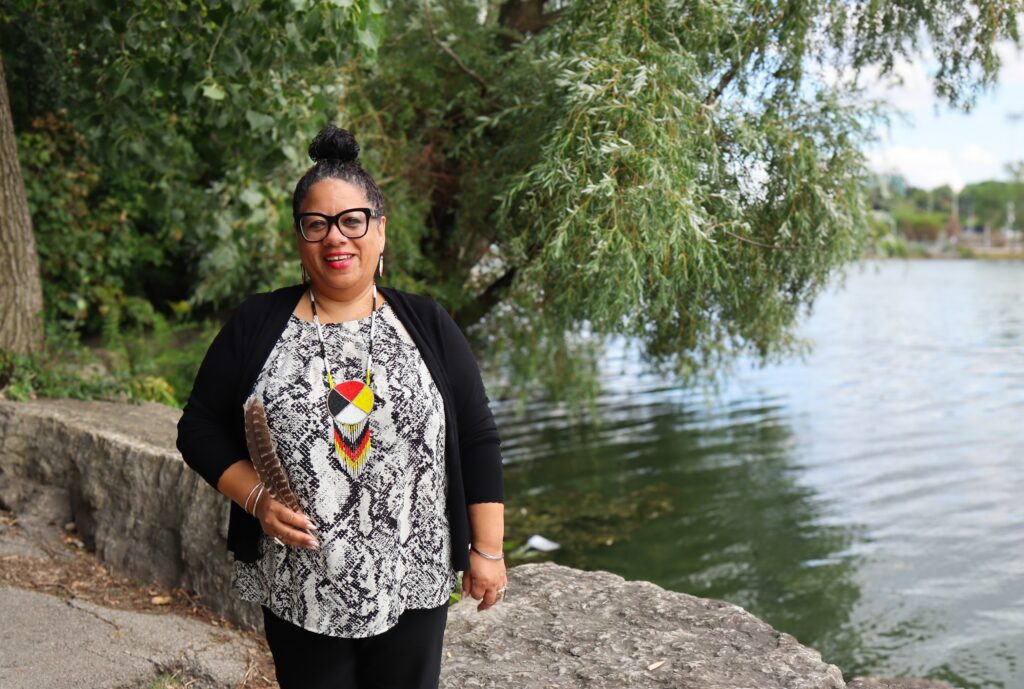
That’s the message that Teresa Joudrey, owner of Santele’s Healing Circles (pronounced sandle-less), a business that offers Indigenous-led cultural-based learning circles, wants to share.
“It’s not about replacing clinical medicine” she explains. “It’s about expanding our understanding of what healing can encompass. Stories themselves carry medicine.”
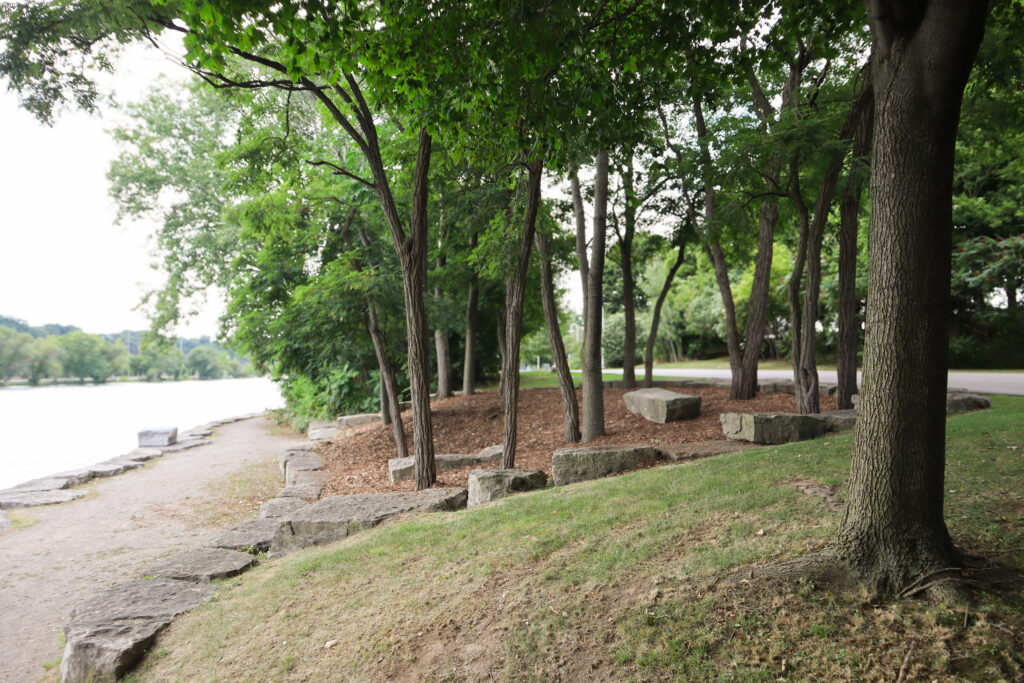
It’s a hot day in August when I meet Teresa by the water at Bayfront Park. The cicadas are singing their late-summer chorus, joined by the laughter of people walking down the path behind us. The bay ripples its reflection of the trees and sky.
Teresa tells me that she feels happiest by the water. As a Mi’kmaq woman and member of the L’sitkuk First Nation—just outside the Bay of Fundy in what is now known as Nova Scotia—she feels very connected to water in all its forms. “You’ll always find me when I’m not working somewhere near the water.”
Joyful work

I ask what’s bringing her joy right now. She mentions spending time with loved ones (including her senior Chihuahua Terrier, Paco), reading a good book (she just finished Willie: The Game-Changing Story of the NHL’s First Black Player), and running Santele’s Healing Circles.
“Work is healing and joyful,” she says.
As part of her work, Teresa leads an experiential learning circle called the KAIROS Blanket Exercise, and has so far trained 18% of all Hamilton Family Health Team staff with more sessions planned for the fall and winter. The exercise was developed in 1997 by The Aboriginal Rights Coalition (ARC), a precursor to KAIROS, and has steadily evolved over the years while maintaining Indigenous leadership as a central focus.
“In a word, it’s an experience,” Teresa explains. “You get to walk in our moccasins for a couple hours, where we walk through 500 plus years of history on these lands we now call Canada and the U.S. Participants take on roles representing Indigenous Peoples as they move through that history.”
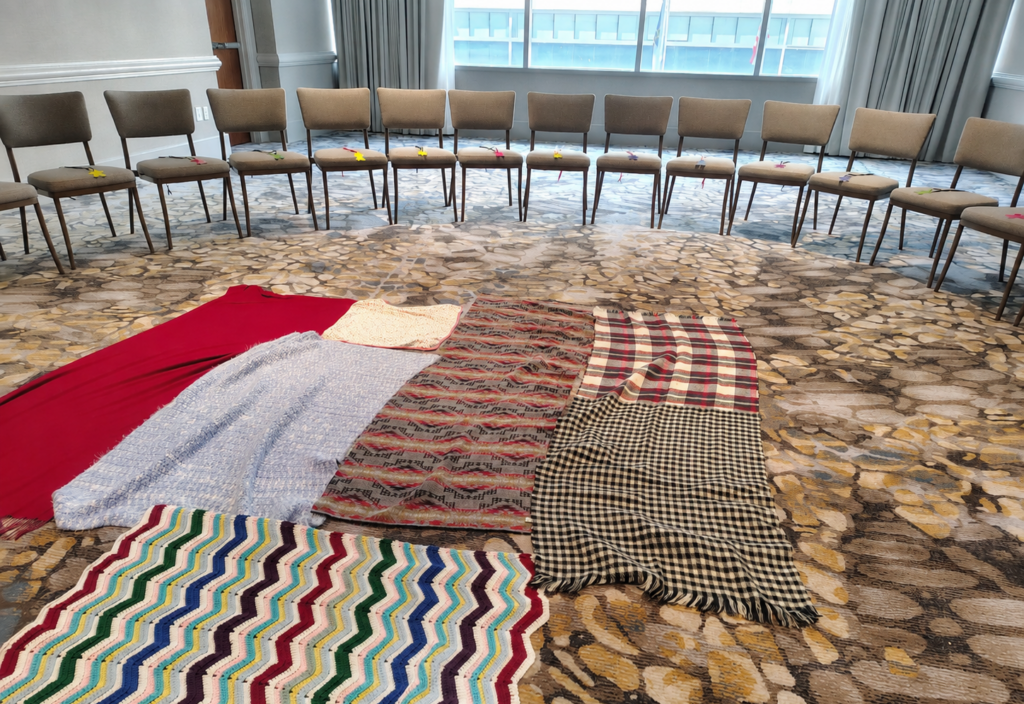
The exercise involves each participant being the steward of a blanket, which is used to represent the land. You’re then walked through history from pre-contact, through treaty-making, colonization and resistance into the modern day.
It touches on heavy topics such as the sixties scoop, residential schools, forced relocation, disease, genocide, and the devastating impacts of colonization on Indigenous Peoples. After the experiential portion, participants come together in a talking circle to reflect, process, and share.
Santele’s Healing Circles asks each participant to bring in their own blanket rather than using one that’s provided. “The blankets represent your nation, your culture, your language, your identity. Everything you need to survive, as well as your responsibility and stewardship,” Teresa explains. Bringing in your own blanket helps that responsibility hit home.
Listening to Spirit
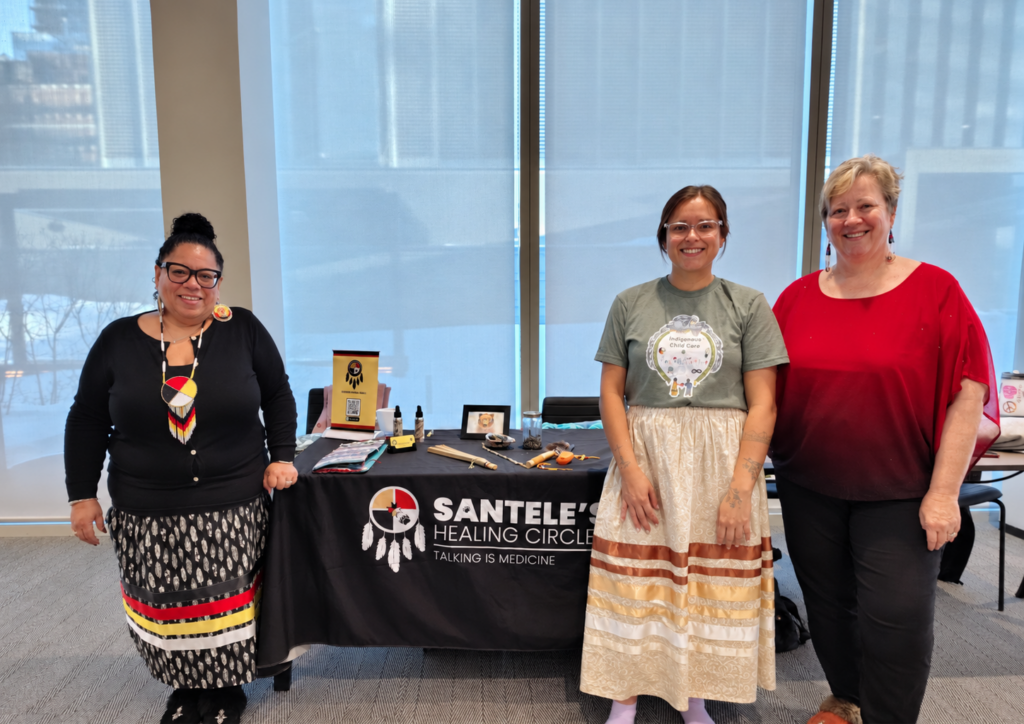
Teresa is a retired law clerk and spent most of her career working in the Canadian and American legal systems. She loved it, but by the end of her time in law, it started feeling too transactional.
As the COVID-19 pandemic hit and the work she was doing transitioned to virtual, she realized it was no longer fulfilling. A friend started talking to her about KAIROS Canada and the Blanket Exercise, but she wasn’t so sure at first.
“I’m not a public speaker,” she admits. “I’m very shy. If you would have told me I would be doing what I’m doing, I would have laughed. A big belly laugh.”
Her friend, however, knew that she would be a perfect fit to facilitate the Blanket Exercise. “She saw in me what I just could not see.” Teresa began working part-time with KAIROS Canada running virtual sessions to build her confidence. After a while, she realized it’s what she was meant to be doing.
“There was this burning within me that said I have to carry these stories. It was the Spirit within, the ancestors within that said, yes, we need you.”
In 2022, she made the leap to focus on Santele’s Healing Circles full-time. She built a team of people who are “doing this work the same way from the same kind of heart that I am,” including her best friend Sarah, who she says is like a sister to her.
Decolonizing medicine
Teresa’s ceremonial name translates in English to “keeper of the medicines.” And while she had an initial hesitation when given this name, thinking she doesn’t know medicinal plants as well as her mother or grandmother, she quickly realized that medicine is so much more than that.
“A hug is medicine. A smile is medicine. Sharing stories is medicine,” she states. “When we talk about decolonizing medicine, something I would say is paramount is that we look at medicine coming in different forms.”
Housing, financial stability, access to good food and clean water, and access to community, tradition, and belonging are just some of these forms. From what Teresa has come to understand through Mi’kmaq language and teachings, the traditional understanding is centred on the well-being of the whole person—body, mind, emotion, and spirit—recognizing these as interconnected rather than viewing health and sickness as separate concepts.
She’s happy to see that the Hamilton Family Health Team is doing this in many ways already through team-based primary care, which involves a team of healthcare professionals in different disciplines (like mental health, nutrition, pharmacy, physiotherapy, and more) working closely with family doctors and family practice teams to care for patients.
Practicing reconcili-action
Teresa introduced me to the word “reconcili-action” when I participated in the Blanket Exercise this past winter. It’s stuck with me ever since.
“Reconciliation is learning and relationship. Reconcili-action is what we choose to do with what we’ve learned,” Teresa explains.
I ask her how organizations can practice reconcili-action, and she’s quick to make clear that she doesn’t speak for everyone and is not here to give a checklist. Every individual and group is at a different point of their journey.
“You don’t have to know everything when you start. Be willing to listen respectfully, humbly listen, be willing to learn, unlearn, relearn, to reflect, to understand, to build relationships. Then ask yourself, what meaningful action can I take with what I now know?”
An element that’s critical for healthcare organizations to remember is the centuries of systemic abuse, racism, lack of access, and intentional erasure of Indigenous healing practices in Canadian healthcare. “There has been mistrust, disconnect and a lack of respect between Indigenous Peoples and the Canadian healthcare system, and rebuilding that relationship takes time,” Teresa says. “It begins with listening, understanding and respect, and then asking what meaningful action we can take to move forward together.”
She gives a wide range of examples to move forward in a good way. They include Nova Scotia Health, who are implementing an organization-wide smudging policy that’s expected to be in place at all their facilities this fall. She mentions that having an elder or knowledge keeper who can be called on when needed can help take care of the spiritual wellbeing of the community. An Indigenous liaison can also be a great support for community members.
Some other ideas:
- Examine policies and practices.
- Identify the barriers Indigenous patients encounter.
- Listen to Indigenous patients and communities.
- Build genuine relationships with Indigenous communities and organizations.
- Include Indigenous voices in decisions that affect Indigenous people.
- Examine Indigenous representation and hiring.
- Look at procurement and opportunities to support Indigenous businesses.
- Create culturally safe environments and respect Indigenous ways of knowing and healing.
- Continue educating staff and leadership.
- Ensure reconciliation is not placed on the shoulders of one Indigenous employee or one EDI department.
- Establish accountability and be willing to examine uncomfortable truths.
- Recognize reconciliation as an ongoing relationship rather than something an organization completes.
She mentions that she’s appreciated how the Hamilton Family Health Team has extended the opportunity to complete the Blanket Exercise to all our staff, and how we continue to build our relationship outside of a “one-and-done” mindset. “You’re not stagnant,” she says. “You’re moving like the water here right in front of us.”
Get in touch
Organizations or groups interested in working with Santele’s Healing Circles can reach out to Teresa by email at teresa@santelesHC.com, by phone at 1-866-420-5672, and online at santeleshealingcircles.com.
Written by Robyn Obermeyer
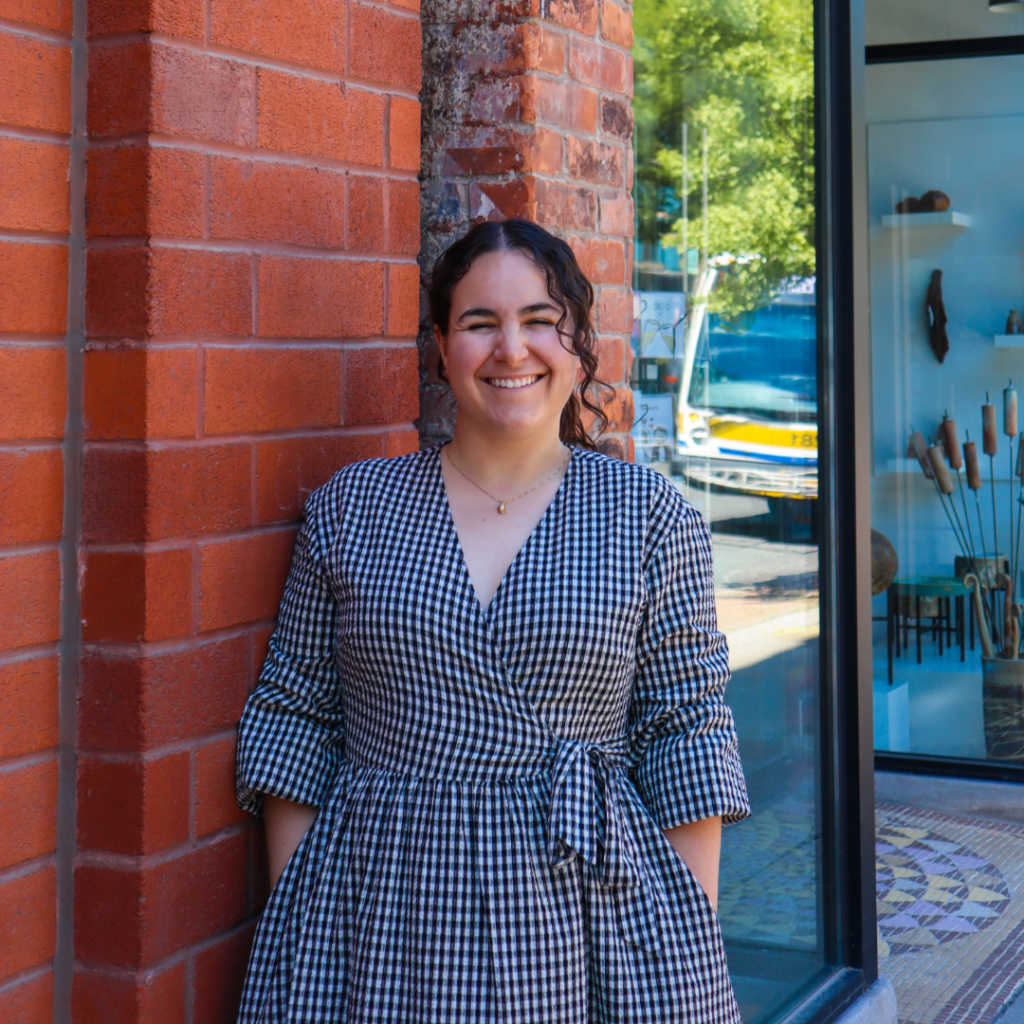
Robyn is the HFHT’s Lead for Communications and Public Relations. You can get in touch with her at robyn.obermeyer@hamiltonfht.ca.