

The People of Primary Care
Non-judgemental, equitable care with a Mental Health Counsellor
Welcome to our new series, The People of Primary Care: the human stories behind the healthcare you receive at your doctor’s office or healthcare hub.
Please introduce yourself.
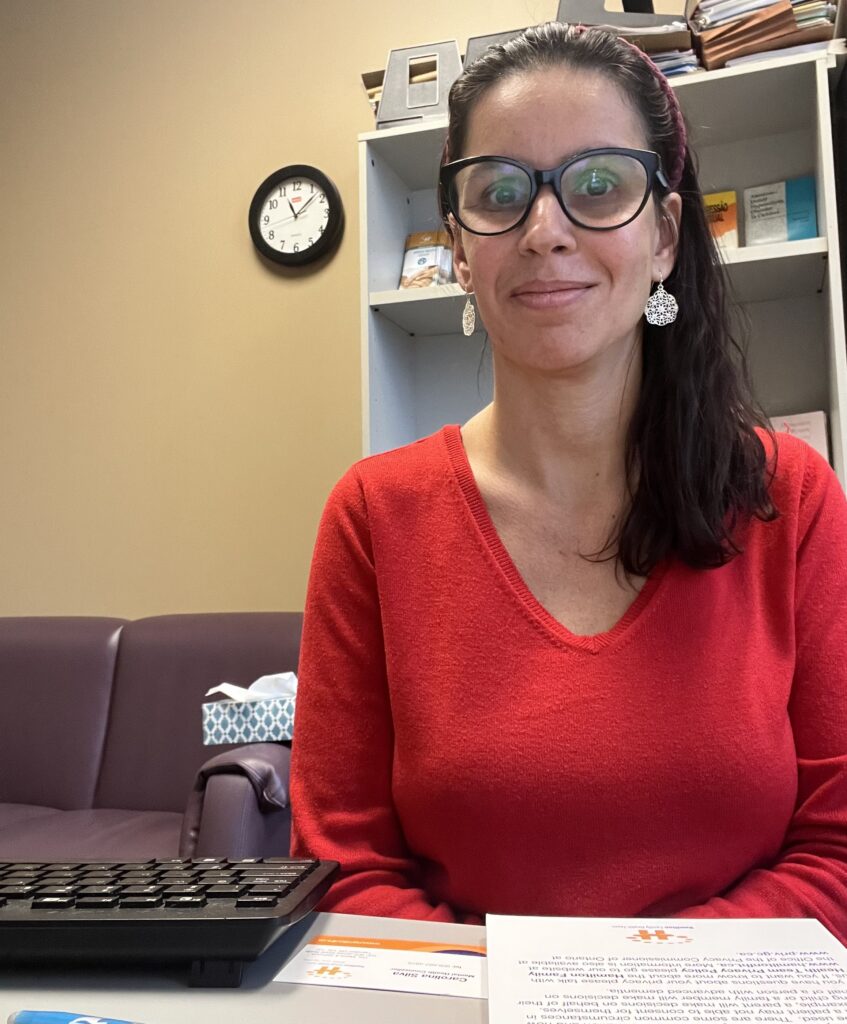
My name is Carolina Silva and I’m a Mental Health Counsellor.
What is a Mental Health Counsellor?
Mental Health Counsellors provide client-centered mental health assessment, counselling, and brief treatment/interventions to individuals across the lifespan within a primary care setting. We collaborate with an interdisciplinary team to deliver accessible, high-quality care, while respecting patient preferences for in-person, telephone, or virtual services.
What brought you to this profession?
My interest in working as a Mental Health Counsellor comes from my experience as a social worker in Brazil, where I worked in primary care with vulnerable populations and managed social workers within primary health care teams. This role helped me understand how social and structural challenges directly impact people’s mental health and emotional well-being.
During that time, I also noticed important gaps in mental health support within primary care, which had a strong impact on me. It motivated me to build more knowledge and skills in mental health, especially in assessment, counselling, and integrated care.
I’ve continued my career in primary health care as a Mental Health Counsellor, combining my social work experience with a focused approach to supporting emotional well-being, developing coping skills, and providing accessible, client-centered care within an interdisciplinary team.
What brings you joy in your role?
What brings me joy in my work is collaborating with other healthcare professionals and seeing how integrated mental health care within primary care improves clients’ overall well-being.
I feel especially fulfilled when clients share that they feel heard, understood, and supported in an ethical and non-judgmental space, and when this helps them stay engaged in their care. I also feel proud when clients begin to use coping strategies, advocate for themselves, and reconnect with parts of their lives that once felt difficult.
Working with diversity, inclusion, and addressing inequality adds a strong sense of purpose to my role. Supporting clients from different generations and immigrant communities allows me to provide culturally responsive care while continuing to learn from their lived experiences.
How does working in an interprofessional primary care team support the work you do?
Working within an interprofessional primary care team supports my role as a mental health counsellor by allowing for a more coordinated and holistic approach to care. Collaborating with physicians, physician assistants, dietitians, pharmacists, and other professionals helps build a shared understanding of clients’ emotional, cultural, behavioural, and social needs, which supports more aligned and informed care planning.
This teamwork also strengthens my ability to provide comprehensive assessments, client-centered care, and continuity of support. It enhances client engagement and allows me to focus more on counselling interventions, coping skills, emotional regulation, and ongoing therapeutic support.
It is worth highlighting that my monthly participation in the peer consultation group plays an important role in reflection, shared learning, and mutual support. This space supports my well-being as a mental health counsellor and also helps improve the quality of care I provide.
What’s something patients are often surprised to learn about mental health counselling?
Patients are often surprised to learn that my role as a mental health counsellor includes practical, solution-focused support, not only emotional support and therapeutic conversations. In a confidential and non-judgmental space, clients often appreciate having a safe place to share their feelings, emotions, and behaviours openly. I work with them on coping strategies such as grounding techniques, cognitive reframing, emotional regulation, and behavioural activation to help manage day-to-day challenges.
I also support goal setting and realistic planning around areas like sleep, stress management, routines, and communication, breaking concerns into manageable steps. Follow-up sessions are an important part of my work, as they allow us to review progress, adjust strategies, and provide ongoing support so clients feel more stable, supported, and able to move forward.

Where can we find you outside work?
I have a passion for hiking, an activity that makes me feel happy, energized, and reconnected. Being in nature helps me clear my mind, recharge, and find balance, which supports my overall well-being.
What’s something your colleagues and patients might be surprised to learn about you?
I speak English, Portuguese, and Spanish. If I weren’t a social worker, I would have become a chef. I love cooking, and if I may say so myself, my food is quite tasty, colorful, and creative.