
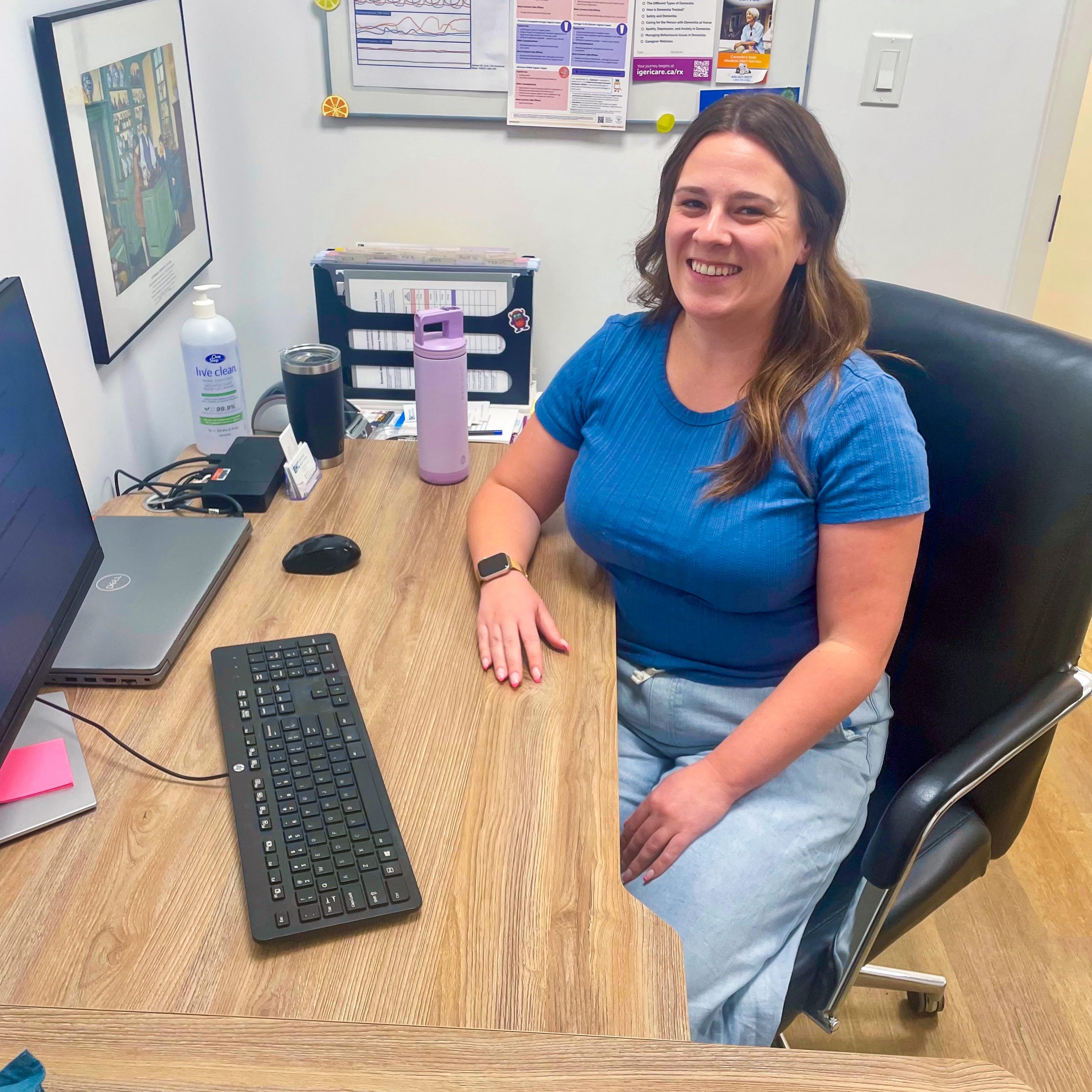
The People of Primary Care is a series that introduces physicians, interprofessional health providers, and support staff who make up the Hamilton Family Health Team’s collaborative, team‑based approach to care.
It highlights the people behind primary care, such as doctors, nurses, mental health professionals, registered dietitians, physiotherapists, respiratory educators, and many others, and the shared work they do to support you and healthier communities.
Please introduce yourself.
My name is Cait Luther, and I am a clinical pharmacist.
What is a clinical pharmacist?
I work alongside the physicians and nurse practitioners in their offices to treat chronic health conditions such as diabetes, cardiovascular disease, menopause, and smoking cessation. As a clinical pharmacist, I recommend the most appropriate medications based on patient specific factors and monitor for side effects.
Patients are often surprised that I’m a Menopause Society Certified Practitioner (MSCP) and can help treat the symptoms of perimenopause and menopause.
What brought you to this profession?
I was drawn to clinical pharmacy because it combines my interest in pharmacology with the opportunity to directly improve patient outcomes. In my role at a the HFHT, I collaborate closely with other healthcare professionals to provide evidence-based treatment plans while building long-term relationships with my patients, allowing me to provide patient-centered care.
How does working with other Interprofessional Health Care Providers (IHPs) support the work you do?
Working on a team with other IHPs allows us to create treatment plans in a patient-centered model and provide the best care we can. I work closely with dietitians when treating diabetes, mental health counsellors when treating insomnia, physiotherapists when treating genitourinary symptoms of menopause, and more.
What brings you joy in your role?
Hearing that my patient’s experience improvements in their quality of life and are able to reach their health goals based on the treatment plans we’ve created together.
Where can we find you if you are not in the office?
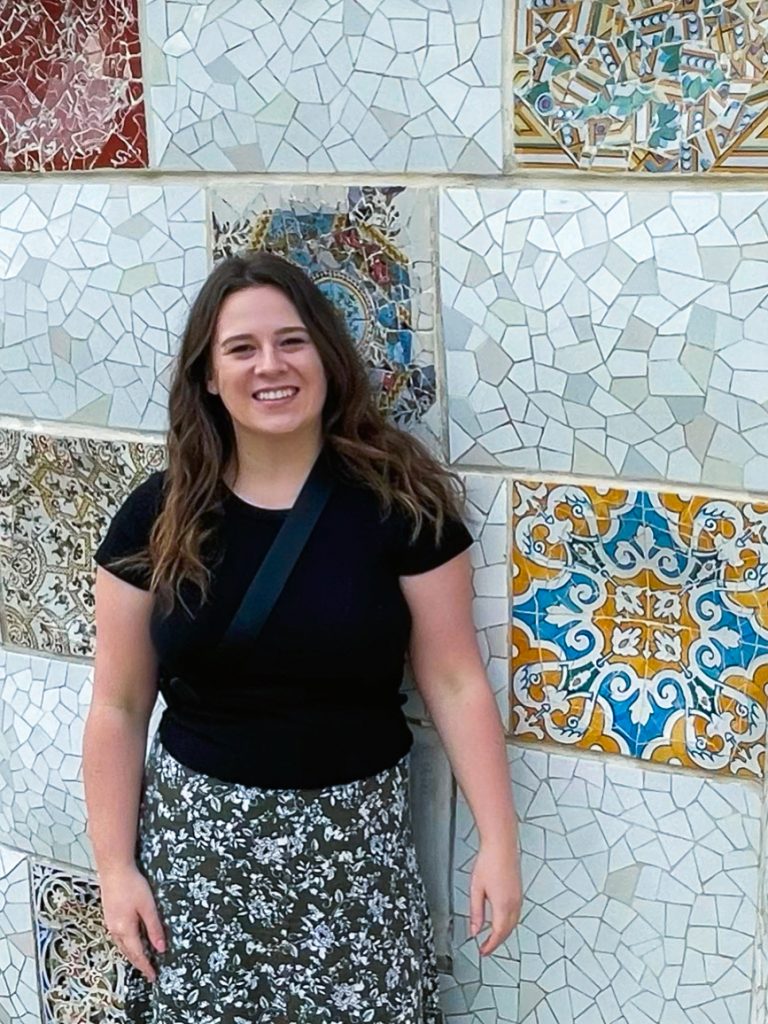
Traveling! This was taken on a trip to Spain!
I’m also a member of our Groups Team! I help develop and facilitate some of patient workshops the HFHT provides.
How can we learn more about what social workers offer?
Pharmacists are involved in several HFHT interprofessional workshop series including: